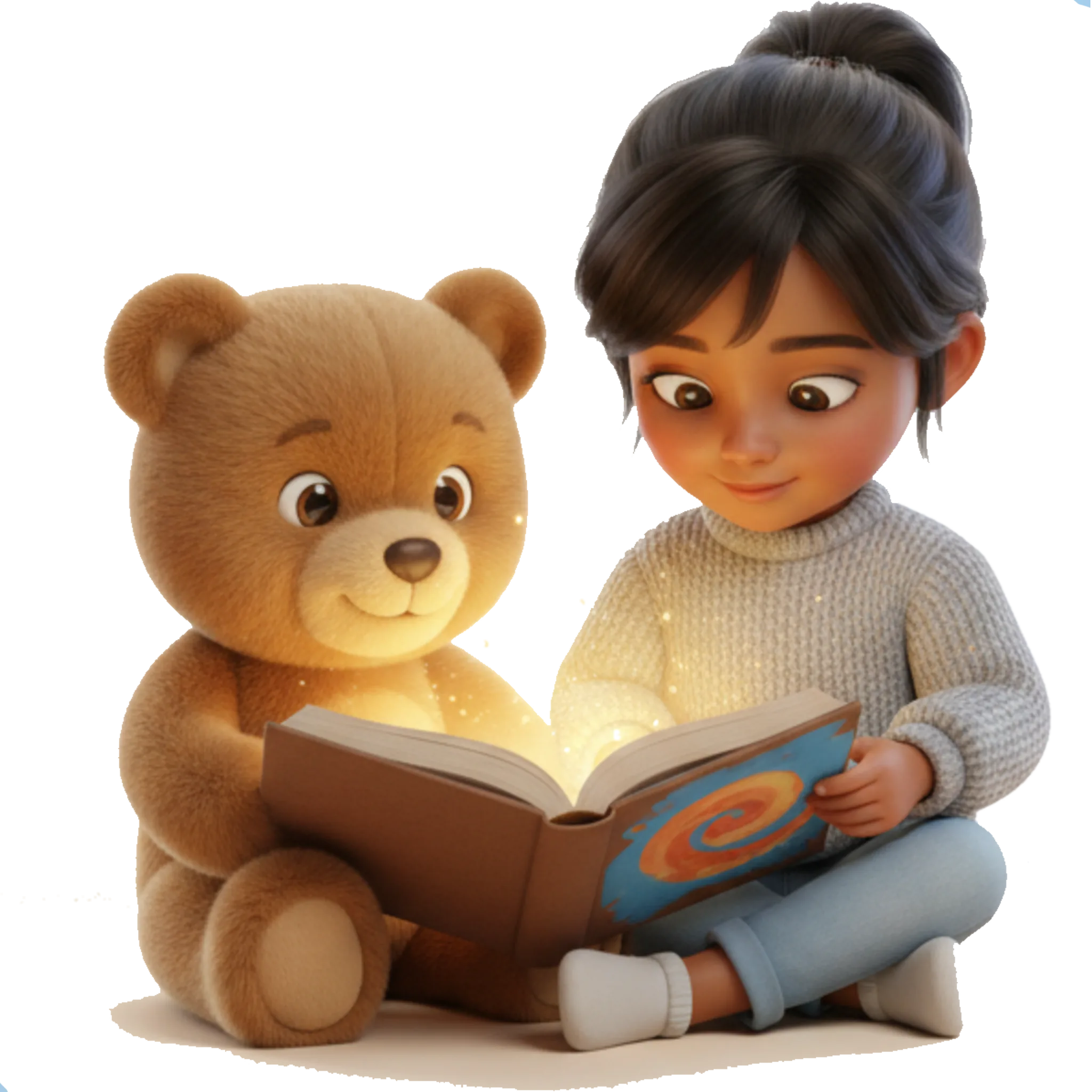
Reading to your child is one of the most powerful activities for their development, fostering language skills, imagination, and a love for learning. To maximize its impact, engage in dialogic reading, a method where you actively involve your child in the story, asking questions and encouraging conversation. This interactive approach transforms reading from a passive experience into a dynamic learning opportunity, significantly enhancing their comprehension and vocabulary.
Far from just a quiet bedtime ritual, reading aloud can be a vibrant, two-way conversation that builds crucial cognitive and emotional skills. When you actively involve your child, you're not just reading words; you're teaching them how to think, connect ideas, and express themselves.
The Power of Interactive Reading: What is Dialogic Reading?
Dialogic reading is a research-backed method where the adult and child swap roles during reading time. Traditionally, the adult reads and the child listens. In dialogic reading, the child becomes the storyteller, and the adult acts as an active listener, questioner, and expander of their child's responses. It turns reading into a conversation, helping children develop a deeper understanding of the story and strengthening their language skills.
Why Dialogic Reading Works
- Boosts Language Skills: By encouraging children to talk about the story, they practice new vocabulary and sentence structures.
- Enhances Comprehension: Asking questions helps children connect events, understand character motivations, and predict outcomes.
- Develops Pre-Reading Skills: Children learn about narrative structure, print awareness, and the joy of stories.
- Strengthens Parent-Child Bond: Shared, interactive experiences build positive associations with reading and deepen emotional connection.
- Fosters Critical Thinking: Children learn to analyze, interpret, and reflect on what they're reading.
Key Strategies for Maximum Impact: CROWD and PEER
To effectively implement dialogic reading, two acronyms can guide your interactions: CROWD for the types of prompts you use, and PEER for how you respond to your child's comments.
The CROWD Prompts
Use these prompts to encourage your child to talk about the book:
- Completion: Leave a blank at the end of a sentence and have your child fill it in. (e.g., "The cow jumped over the moon, and the little dog...") This helps children learn story structure and vocabulary.
- Recall: Ask questions about what happened in the story, especially if it's a familiar book. (e.g., "What happened to the bear?") This helps them remember plot details and sequence.
- Open-Ended: Ask questions that require more than a "yes" or "no" answer. (e.g., "What do you think will happen next?" or "How does the character feel?") These questions encourage deeper thinking and expression.
- Wh- Questions: Ask "who," "what," "where," "when," "why," and "how" questions. (e.g., "Where did the little pig go?") These focus on specific details and facts.
- Distancing: Help your child connect the story to their own life and experiences. (e.g., "Does this remind you of anything you've done?" or "Have you ever felt like that character?") This makes the story personally relevant and builds empathy.
The PEER Sequence
When your child responds to a CROWD prompt or makes a comment, use the PEER sequence to extend the conversation:
- Prompt: Use a CROWD question to get your child to say something about the book.
- Evaluate: Acknowledge and affirm your child's response. ("That's right!" "Good idea!")
- Expand: Repeat what your child said and add a little more information. (Child: "Bear is sad." Parent: "Yes, the bear is sad because he lost his honey.")
- Repeat: Ask the original prompt again to give your child another chance to use the new information or vocabulary. (Parent: "Why do you think the bear is sad?")
Practical Tips for Engaging Story Time
Integrating dialogic reading into your routine doesn't have to be complicated. Here are some simple tips:
Choose the Right Books
- Age-Appropriate: Select books with engaging illustrations and concepts suitable for your child's age.
- Repetitive & Predictable: Books with refrains or predictable patterns are great for completion prompts.
- Concept Books: Books about colors, shapes, animals, or feelings are perfect for "wh-" questions and expanding vocabulary.
- Child's Choice: Let your child choose the book whenever possible. Their interest is your greatest asset.
Make it a Habit, Not a Chore
- Consistency is Key: Even 10-15 minutes a day makes a big difference.
- Be Flexible: Reading doesn't always have to be at bedtime. Read during snack time, in the car, or while waiting.
- Follow Their Lead: If your child wants to skip pages or focus on one illustration for a long time, go with it. The goal is engagement, not finishing the book.
Create a Cozy Atmosphere
- Snuggle Up: Physical closeness enhances the bonding experience.
- Minimize Distractions: Turn off the TV and put away phones.
- Use Your Voice: Vary your tone, use different voices for characters, and add sound effects. This brings the story to life and keeps children captivated.
Beyond the Book: Extend the Learning
The conversation doesn't have to end when the book closes. Talk about the story later in the day, draw pictures related to it, or act out scenes. For a truly magical experience, imagine creating a personalized story where your child is the hero, exploring themes and characters from their favorite books. Yasso can help you do just that, crafting unique adventures tailored to your child's interests.
When to Adjust Your Approach
Remember that dialogic reading is a framework, not a rigid set of rules. Adjust based on your child's age, mood, and attention span.
| Child's Age | Focus | Example Prompts |
|---|---|---|
| Infants (0-12 months) | Point to pictures, name objects, make sounds. Focus on cuddling and enjoying the shared experience. | "Look at the dog! Woof woof!" "Can you touch the baby?" |
| Toddlers (1-3 years) | Completion, "wh-" questions (what, where), simple recall. Focus on single words and short phrases. | "The duck says..." "Where's the ball?" "What is this?" |
| Preschoolers (3-5 years) | All CROWD prompts, PEER sequence. Encourage longer responses and connections to personal experiences. | "What do you think will happen next?" "How does she feel?" "Does that remind you of when...?" |
| School-Aged (5-10 years) | Deeper discussions, predictions, character analysis, moral lessons. Encourage independent thought. | "Why do you think the character made that choice?" "What's the main idea?" "How would you have solved that problem?" |
Every child is different, and some days will be more interactive than others. The most important thing is to make reading a positive, joyful, and consistent part of your child's life. If you have concerns about your child's language development, please consult your pediatrician.
By embracing interactive reading, you're not just helping your child learn to read; you're helping them learn to love reading, to think critically, and to explore the boundless worlds within stories. So snuggle up, open a book, and let the conversation begin!